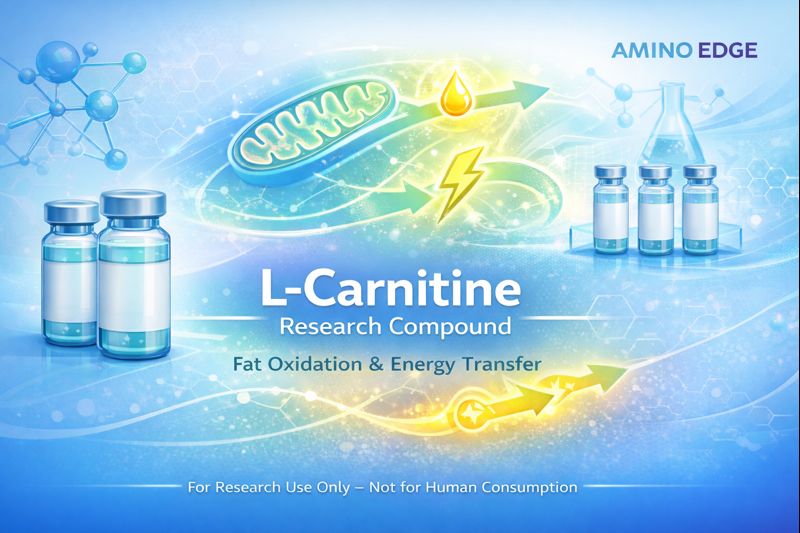
What is L-Carnitine?
L-Carnitine is a naturally occurring compound widely studied in metabolic and energy research. In laboratory settings, it is best known for its role in how cells manage and transport fatty acids to support energy production.
Why researchers are interested in L-Carnitine
L-Carnitine is studied because it acts as a transport molecule that helps move fatty acids into the mitochondria, often described as the energy centres of cells. This process allows researchers to study how energy is produced at a cellular level.
How L-Carnitine differs from other metabolic research compounds
Unlike compounds that influence hormonal signalling, L-Carnitine is researched for its mechanical role in cellular transport rather than direct stimulation of biological systems.
Areas of ongoing research interest
Current areas of research include fatty acid transport, cellular energy metabolism, mitochondrial efficiency, and metabolic pathway modelling.
These findings remain experimental and are limited to laboratory and preclinical research environments.
hello@aminoedge.online
© Copyright 2026 Exploring the Science of Peptides